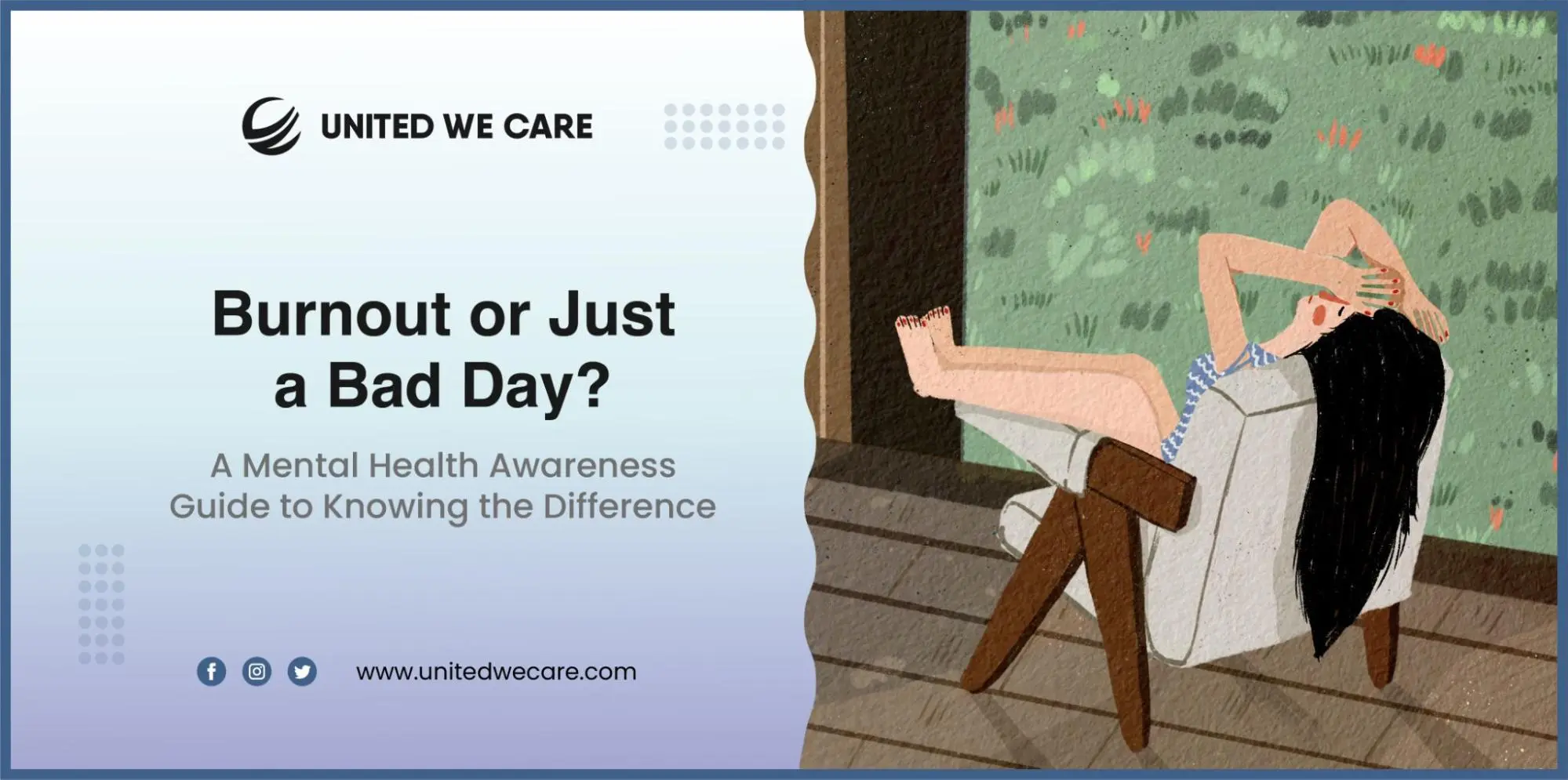
Ever had one of those days where you wake up already tired, stare blankly at your to-do list, and feel like even brushing your teeth might take Olympic-level energy? Maybe you snap at your partner for no reason or find yourself scrolling endlessly through social media, trying to feel something. Then the guilt hits: “Why am I like this? It was just a long day… or wait, am I actually burning out? But how to know if you’re burned out or just having a bad day?
You’re not the only one asking. In 2023, Gallup found that 76% of employees experienced burnout on the job at least sometimes, and 28% said they felt burned out “very often” or “always.” That’s a sobering figure, and a sign that burnout isn’t just a buzzword; it’s a reality many are silently enduring.
Burnout isn’t a sudden crash, it’s a slow, sneaky leak. And the truth is, the line between a rough day and actual burnout isn’t always as clear as we’d like it to be. But learning to tell the difference can change the way you take care of yourself, and might even help you avoid a full-blown emotional flat tire.The difference between stress and burnout is that stress often comes with periods of relief, while burnout is a constant emotional drain.
This blog explores how to recognize the difference between burnout and a bad day, what the signs are, how to respond with compassion, and where tools like Stella can step in to support your mental wellness journey. We’ll also walk you through tangible strategies, reflective questions, and therapist-backed insights that gently guide you back to balance. Recognizing the difference between stress and burnout helps you understand when to take action before things get worse.
What Burnout Actually Feels Like
Imagine your brain is a smartphone. Normally, a night’s sleep is like plugging it in. A bad day might drain it faster than usual, but once you charge overnight, you’re good to go. Burnout? Burnout is when the charger barely works, your apps keep crashing, and even switching it to low-power mode doesn’t help anymore.
Burnout is more than just being tired. It’s emotional, mental, and physical exhaustion caused by prolonged stress. Think of it as a soup of tiredness, cynicism, and self-doubt, simmering on the stove for weeks—sometimes months—until it finally boils over.
“I remember a client telling me, ‘I kept thinking if I could just get to the weekend, I’d feel better. But the weekend came and went—and I was still bone-tired.’ That’s a red flag we explore gently in therapy.”
According to Safe Work Australia (2022), over 60% of employees report experiencing symptoms of burnout. That’s more than half the workforce—and that doesn’t even count students, parents, caregivers, and others juggling the invisible load. One sign of how to know if you’re burned out or just having a bad day is if the feeling of exhaustion doesn’t fade after a restful weekend. One of the main causes of burnout could be neglecting self-care while juggling multiple responsibilities at once. Identifying the causes of burnout in your life, such as unrealistic expectations, can help you take the first step in preventing it.
So what does burnout feel like?
- You’re always tired, no matter how much you rest.
- Your job (or relationships) feel like a chore, not a choice.
- You feel numb, cynical, or detached—like you’re living life in grayscale.
- You keep forgetting things, missing deadlines, or zoning out. Even small tasks feel like mountains.
Recognizing the signs of burnout early can help you take action before it gets worse, such as feeling emotionally detached. Some common signs of burnout include:
- constant fatigue
- lack of enthusiasm
- difficulty focusing on daily tasks.
Understanding the signs of burnout—like irritability and disengagement—can help you identify when you need help.
How to Spot a Bad Day
We all have bad days. Maybe your cat knocked over your coffee or you had a disagreement with a friend. A bad day can feel overwhelming in the moment, but it passes—often with a nap, a good cry, or some solid carbs.
The main difference? Bad days don’t stick to your bones.
Bad days:
- Usually have a clear trigger (bad news, bad sleep, bad vibes).
- Don’t affect you in the long run.
- Come and go—they don’t pile up.
Here’s an example. Another client once said, “I cried on the train after a tough meeting. But later that night, I laughed at a dumb meme, watched my comfort show, and felt okay again.” That’s a bad day. Your emotional rubber band might stretch, but it doesn’t snap.
With burnout, the snap has already happened—you’re just trying to tie the pieces back together. If you’re unsure how to know if you’re burned out or just having a bad day, reflect on whether the fatigue lingers beyond a couple of days.
When It’s Not Clear: The Warning Zone
What makes this all tricky is the gray area—the middle zone between stress and burnout. Here’s where people often get confused:
- You think a break or vacation will fix it, but it doesn’t.
- You try working out or meditating, but still feel like a zombie.
- You keep pushing through, telling yourself, “Everyone’s tired; I’m just being lazy.”
Spoiler: You’re not lazy. You might be depleted.
In therapy, we often talk about the body whispering before it screams. Headaches, forgetfulness, irritability, digestive issues, even procrastination—these are all ways your body tries to tell you, “Hey… I’m running on empty here.”
Stella, our digital wellness companion, helps you tune into those whispers before they become full-blown alarms. Through check-ins, reflection prompts, and personalized tools, Stella supports you in identifying the signs early.
Feeling Burned Out? Here’s What to Do
First, take a deep breath. Then ask yourself the following:
- Is this feeling new or ongoing?
- Can I identify what triggered this?
- Do I still find joy or energy in things I usually love?
- How long have I felt this way?
If your answers lean toward “ongoing,” “no joy,” and “weeks or months,” you might be looking at burnout. It might be time to consult a mental health professional or talk to Stella.
Need Help Identifying What You’re Feeling?
Sometimes, the hardest part is naming the emotion. That’s where tools like the Feelings Wheel come in. It helps you move beyond “sad” or “tired” to pinpoint more specific emotions like “overwhelmed,” “disappointed,” or “lonely.”
Use them when journaling, during your Stella check-ins, or whenever you feel “off” but can’t quite explain why.
Naming how you feel is the first step to healing. Mental health tips for burnout prevention encourage regular breaks and time for reflection to keep your well-being intact.
Here’s how we can begin:
- Validate your experience.
- Remind yourself: “This isn’t just in my head. It’s real, and I’m not alone.”
- Give yourself permission to feel tired without self-blame. Normalize your emotional response.
- Set boundaries.
- Begin by identifying your non-negotiables—sleep, meals, alone time.
- Try saying, “I’d love to help, but I need some space right now,” or “Can we reschedule? I’m stretched thin today.”
- Create tech-free zones (e.g., no email after 8 pm) to protect your energy.
- Rest actively.
- Passive rest (like scrolling or zoning out) can leave us more tired. Try active rest instead: mindful walks, stretching to calming music, creative hobbies (painting, journaling, even gardening).
- Make a “rest menu”—a list of small, replenishing activities to pull from when you’re overwhelmed.
- Reconnect with purpose.
- Burnout often detaches us from our sense of why. Revisit what used to light you up. Volunteer, take a class, join a community event—something to reconnect with meaning beyond your to-do list.
- Talk to someone.
- Whether it’s a close friend, a support group, or a licensed therapist, sharing your struggle lightens the load.
- Stella also offers a helpful ear and can provide 24/7 companionship and support in over 120 languages.
“One of the kindest things you can do for yourself is to stop running and start listening. Burnout isn’t weakness—it’s your body waving a white flag.”
Just a Bad Day? Here’s How to Care for Yourself
If you realize it’s just a bad day—breathe easy. You still deserve care.
Try this:
- Name it. “Today sucked.” There’s power in acknowledging it.
- Take care of your body. Eat something warm. Drink water. Lie down with a soft blanket.
- Limit overexposure. Step away from doomscrolling, toxic conversations, or anything that fuels the negativity loop.
- Choose one small joy. A warm shower. A funny YouTube clip. A cozy blanket. Call a friend who makes you feel safe.
- Do one thing that makes you feel in control. Organize a drawer, wash your face, reply to one email. It’s not about productivity—it’s about reclaiming agency.
A bad day doesn’t require fixing—it just needs gentleness. Like a passing cloud, it comes and goes.
Pause, Breathe, and Listen to Yourself
Whether you’re on the brink of burnout or just trudging through a rough Tuesday, know this: your feelings are valid. You are allowed to pause. You are allowed to rest. You don’t need to earn your worth through productivity.
And you don’t have to figure it all out alone.
Stella is here to help—like a digital hug and a gentle coach in your pocket. With guided check-ins, stress trackers, and evidence-based tools, Stella helps you recognize what you’re feeling and what to do next.
You deserve more than just surviving. You deserve to feel whole again.
So next time you’re wondering, “Burnout or just a bad day?”—you’ll know how to listen in and take the next right step. Mental health tips for burnout prevention include creating boundaries, practicing self-care, and learning when to say no.
Following mental health tips for burnout prevention can help you avoid emotional exhaustion and stay energized at work and home
And remember: even on your hardest days, you’re still worthy of care.