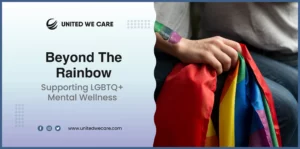
Pride Month is more than a vibrant celebration of love, identity, and freedom. It is a time of reflection, remembrance, and resilience. As the streets fill with color, flags, and movement, we’re also called to acknowledge the emotional landscapes that lie beneath the surface — the mental health journeys, the stories of healing, and the quiet triumphs that often go unseen.
In therapy rooms, in support groups, and within the quiet spaces of self-reflection, we find another kind of pride: one that’s deeply personal and painfully earned. LGBTQ+ pride isn’t just about coming out — it’s about coming home to yourself. It’s about reclaiming your right to exist in a world that hasn’t always made space for you. And with that reclamation comes the necessity of mental health care that is affirming, inclusive, and healing.
This blog is dedicated to that intersection — where mental health and pride meet. It’s a space to validate your journey, explore the unique mental health challenges the LGBTQ+ community faces, and celebrate the strength it takes to simply be.
The Quiet Storm Beneath the Rainbow: Why LGBTQ+ Mental Health Needs Attention
Under the bold colors of LGBTQ+ pride, many carry burdens that are invisible to the eye — trauma, rejection, anxiety, depression, and internalized shame. While Pride Month celebrates visibility, we must also shine light on the realities that many still endure in silence.
Research shows that individuals within the LGBTQ+ community are more likely to experience:
- According to the National Alliance on Mental Illness, LGBTQ+ individuals are more than twice as likely as heterosexual individuals to experience a mental health condition (NAMI, 2022).
- Increased risk of suicidal ideation and attempts, especially among youth
A national survey by The Trevor Project found that 45% of LGBTQ+ youth seriously considered suicide in the past year, with more than half of transgender and nonbinary youth reporting suicidal thoughts (The Trevor Project, 2023). - Chronic stress due to discrimination and microaggressions
Meyer’s (2003) Minority Stress Model highlights how LGBTQ+ individuals experience unique, chronic stressors such as prejudice, expectations of rejection, and internalized stigma, all of which contribute to mental health disparities. - Rejection from family and community
Research by Ryan et al. (2009) found that LGBTQ+ adolescents who faced high levels of family rejection were 8.4 timesmore likely to report having attempted suicide compared to peers with accepting families. - Substance use disorders as coping mechanisms
LGBTQ+ individuals are nearly twice as likely to use illicit drugs and experience substance use disorders, often as a means of coping with discrimination and trauma (SAMHSA, 2020).
These disparities aren’t rooted in identity — they are born from a society that still struggles to fully accept that identity. The pain is not in being LGBTQ+, but in being misunderstood, erased, or vilified for it.
That’s why supporting LGBTQ+ mental health is not optional — it’s urgent. This support must be trauma-informed, affirming, and actively inclusive.
The Therapist’s Room: A Safe Harbor, or Is It?
Not all therapy spaces can feel safe for everyone. Many individuals in the LGBTQ+ community have had harmful experiences with therapists who pathologized their identity, pushed conversion-based ideologies, or simply lacked the cultural competence to support them.
Mental health and pride are inseparably linked. When someone comes into therapy carrying the wounds of rejection, misgendering, or being closeted in unsupportive environments, it’s not enough to say “you are safe here.” Safety must be demonstrated — through pronoun use, through training, through humility and listening.
To truly support LGBTQ+ mental health, mental health professionals must do the internal work, challenge their biases, educate themselves on gender and sexual diversity, and create atmospheres where clients don’t have to educate their therapist — they get to heal.
Pride as Protest, Pride as Healing
Let’s not forget: LGBTQ+ pride began as protest. Stonewall wasn’t a parade. It was resistance. It was raw, it was angry, and it was necessary.
That same spirit lives on today — in every act of self-acceptance, in every therapy session where someone speaks their truth, in every community that rises up to support its most marginalized members. Pride Month 2025 is not just about celebration; it’s about survival. And healing.
When a trans man finds a support group where he can finally say, “I’m not broken,” that’s pride.
When a lesbian couple walks down the street hand-in-hand, despite the stares — that’s pride.
When a nonbinary person corrects someone’s pronouns and isn’t afraid of the fallout — that’s pride.
These are mental health victories. These are sacred.
What Does Affirming Support Look Like?
If you’re a therapist, a friend, a teacher, a parent — or even someone just learning — here are ways you can help support LGBTQ+ mental health in everyday life:
- Listen more than you speak. Don’t assume. Don’t label. Just listen.
- Use affirming language. Ask about pronouns. Apologize if you mess up, and correct yourself.
- Challenge discriminatory behavior. Silence often equals complicity.
- Educate yourself. Don’t place the burden of teaching on LGBTQ+ individuals.
- Recognize trauma. Understand that many queer individuals carry trauma related to identity.
- Offer community. Isolation can be devastating. Connection is healing.
- Refer responsibly. When offering mental health referrals, ensure providers are queer-affirming.
Affirming support isn’t a single act. It’s a commitment to consistently show up in ways that reflect care, humility, and accountability.
Pride Inside: The Internal Work
Pride Month 2025 is also a time to look inward. If you identify as LGBTQ+, it’s okay if pride doesn’t always feel joyful. It’s okay if you’re still wrestling with shame, grief, or fear.
Mental health healing is not linear. You might feel confident one day, and invisible the next. That doesn’t make you less valid. That makes you human.
In therapy, we often explore the tension between “who I am” and “who I’ve been told I should be.” Pride, in its truest form, is about stitching those pieces together with care, and realizing: you never had to become someone else to be worthy.
Mental Health Resources for the LGBTQ+ Community
If you’re looking to start or continue your mental health journey, here are some affirming organizations and platforms:
- The Trevor Project – Crisis support and resources for LGBTQ+ youth.
- LGBT National Help Center – Free and confidential peer-support phone lines.
- QTPoC Mental Health – Resources for queer and trans people of color.
- Pride Counseling – Therapy from licensed therapists who are experienced in LGBTQ+ issues.
- SAGE – Advocacy and services for LGBTQ+ older adults.
Supporting LGBTQ+ mental health also means making these resources known, accessible, and financially feasible.
You deserve rest. You deserve to take up space. You deserve love without condition.
You don’t have to be out to be proud. You don’t have to wave a flag to matter. Pride is not a performance — it’s an internal knowing: I am worthy. Just as I am.
LGBTQ+ pride is yours, no matter where you are in your journey.
If you’re struggling this Pride Month 2025, please know that it’s okay. Pride and pain can co-exist. Healing and anger can hold hands. Joy and grief can sit at the same table. And you are allowed to feel all of it.
Final Words: Pride is Mental Health
Let us not separate the rainbow from the reality. Mental health and pride are intertwined, always. Every time you honor your truth, take a breath in a world that makes you hold it, or speak your name out loud — you are doing the work. That matters.
Pride Month 2025 is a celebration, yes — but it’s also a call. A call to love more deeply, to heal more intentionally, and to build a world where supporting LGBTQ+ mental health is not activism — it’s the norm.
And until that world exists, may you always find safe harbors. In your people. In yourself. In therapy. In pride.
References
Meyer, I. H. (2003). Prejudice, social stress, and mental health in lesbian, gay, and bisexual populations: Conceptual issues and research evidence. Psychological Bulletin, 129(5), 674–697.
https://doi.org/10.1037/0033-2909.129.5.674
NAMI. (2022). LGBTQ+ Community and Mental Health. National Alliance on Mental Illness. https://www.nami.org
Ryan, C., Russell, S. T., Huebner, D., Diaz, R., & Sanchez, J. (2009). Family acceptance in adolescence and the health of LGBT young adults. Journal of Child and Adolescent Psychiatric Nursing, 23(4), 205–213. https://doi.org/10.1111/j.1744-6171.2009.00200.x
SAMHSA. (2020). Substance Use and Mental Health Issues among LGBTQ+ Populations. Substance Abuse and Mental Health Services Administration. https://www.samhsa.govThe Trevor Project. (2023). 2023 U.S. National Survey on the Mental Health of LGBTQ Young People. https://www.thetrevorproject.org