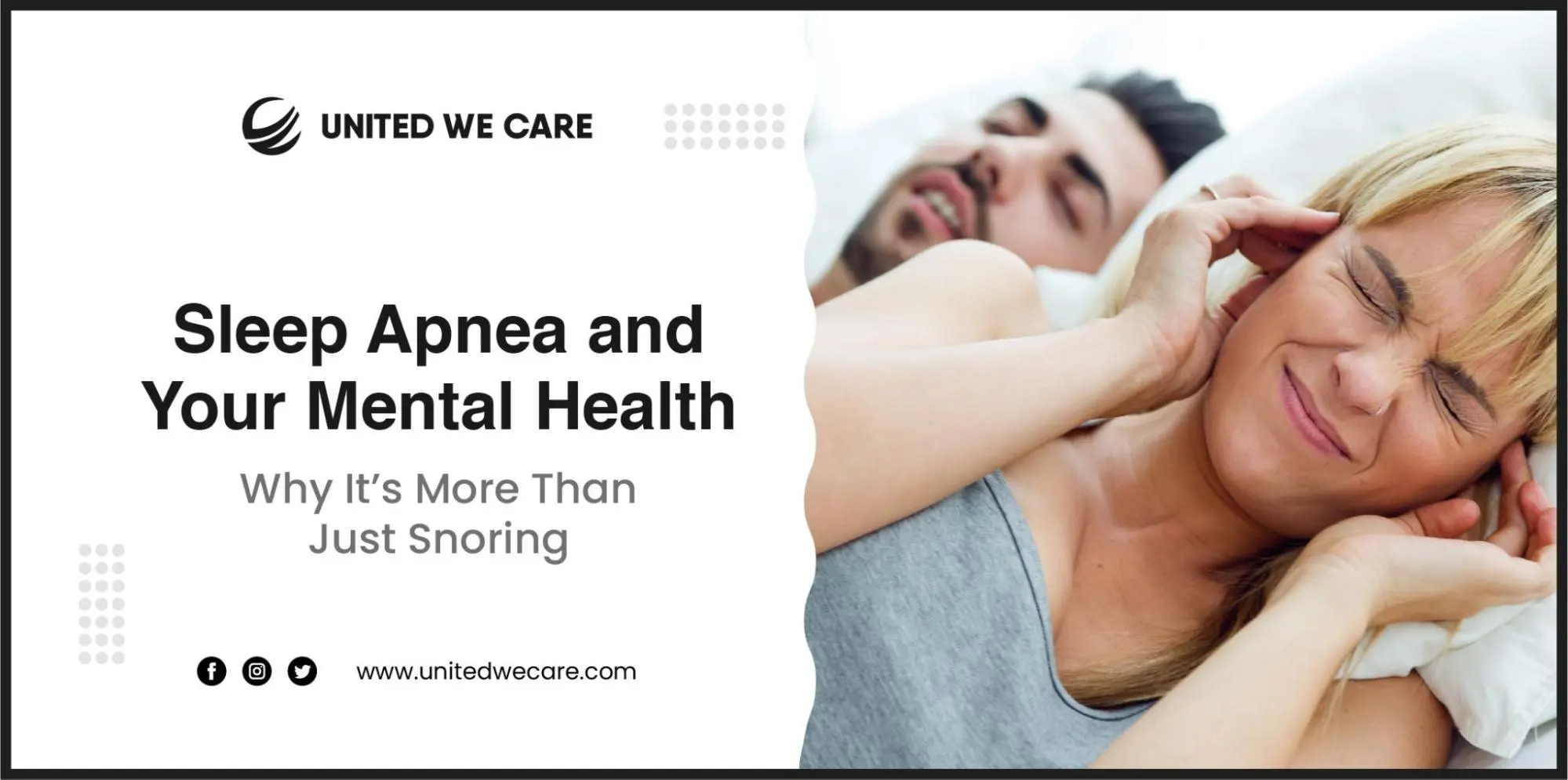
When we think of snoring most of us picture someone making loud noises while they sleep. It can be annoying, especially for the person who sleeps next to them. But what if that snoring was a sign of something much more serious?
Sleep apnea is a condition that affects millions of people around the world, and it’s more than just noisy breathing. In the United States, Sleep Apnea affects approximately 13% of men and 6% of women, making it a common health issue among adults (Christopher N Kaufmann, Et al, 2017). It can have a big impact on your mental health too. Let’s dive into what sleep apnea is, how it can affect your mind, and what you can do about it.
What Is Sleep Apnea?
According to Mayo Clinic (2023), Sleep apnea happens when your breathing stops and starts repeatedly while you sleep. These interruptions can lead to significant health issues if left untreated. People with sleep apnea often experience loud snoring and excessive daytime sleepiness due to disrupted sleep patterns.
There are three primary types of sleep apnea, Mayo Clinic (2023):
- Obstructive Sleep Apnea (OSA): This is the most common type. It happens when throat muscles relax too much and block the airway during sleep.
- Central Sleep Apnea (CSA): This occurs when the brain does not send proper signals to the muscles that control breathing.
- Treatment-Emergent Central Sleep Apnea: Also called complex sleep apnea, this occurs when someone who has OSA turns into CSA while receiving treatment for OSA.
When you stop breathing, even for a few seconds, your body senses the problem and wakes you up just enough to start breathing again. This can happen many times during the night, often without you even realizing it. The result? Poor quality sleep that leaves you feeling tired even after spending hours in bed.
How Sleep Apnea Affects Your Body
Most people know that sleep apnea can lead to physical problems. It is linked to high blood pressure, heart disease, and stroke. But what many do not realize is how it affects the brain and mental health. A research done by Christopher N Kaufmann, et al (2017) indicated that sleep apnea is also associated with increased rates of depression, anxiety, and suicidal ideation, raising concerns regarding the management of mental health in affected individuals.
When you are not breathing properly your body gets less oxygen. This lack of oxygen may cause stress and inflammation which can hurt your brain over time. Combining these with poor sleep can lead to some mental health challenges as well.
The Link Between Sleep Apnea and Mental Health
Anxiety and Depression
Sleep apnea can lead to feelings of anxiety and depression. Poor sleep messes with the balance of chemicals in your brain, like serotonin, which helps regulate your mood. If you’re not sleeping well, you’re more likely to feel irritable, anxious, or even hopeless. Individuals with this disorder have been shown to have 3.11 times increased odds of experiencing depression and 3.68 times greater odds of developing anxiety compared to those without sleep apnea (Christopher N Kaufmann, Et al, 2017).
Brain ‘lag’ and Memory Problems
Ever felt like your brain is ‘lagging’? It is a common complaint for people with sleep apnea. A research done by the American Academy of Neurology (AAN) found that those with sleep apnea symptoms had greater odds of experiencing memory problems compared to those without such symptoms. Poor sleep can often make it harder to concentrate, think clearly or remember things. This may happen because your brain does not get the chance to rest and repair itself during the night. Over time this can affect your ability to work, learn, or manage daily tasks.
Stress and Irritability
Among individuals with below-average sleep quality, approximately 46% rated their mental health as worse or negatively affected, suggesting that sleep disturbances contribute significantly to stress and irritability (Annie Atherton, 2024). This can strain relationships with family, friends, and coworkers, adding to the emotional toll of the condition.
Risk of Serious Mental Health Disorders
Research done by Nadia Goseelin, et al. (2019) confirmed that untreated OSA elevates the risk of progressive cognitive impairment, with alterations in brain structure linked to hypoxia and sleep fragmentation.
In severe cases, untreated sleep apnea can increase the risk of more serious mental health conditions, like bipolar disorder or schizophrenia. While not everyone with sleep apnea will develop these conditions, the connection highlights just how important it is to address sleep apnea early.
How to Know If Sleep Apnea Is Affecting You
It can be hard to tell if you have sleep apnea because the symptoms often happen while you are asleep. However here are some signs to look out for, it is advised to contact a professional if you think you are experiencing these:
- Loud snoring – Especially if it is interrupted by gasping or choking sounds.
- Daytime fatigue – Feeling tired even after a full night in bed.
- Morning headaches – Waking up with a headache could be a sign of low oxygen levels.
- Mood changes – Increased irritability, anxiety, or feelings of depression.
- Difficulty concentrating – Struggling or having trouble focusing or remembering things during the day.
- Frequent waking at night – Waking up multiple times without a clear reason.
If these symptoms sound familiar, it is worth talking to a doctor. They might recommend a sleep study to confirm whether you have sleep apnea or not.
Taking Care of Your Mental Health
If sleep disturbances are affecting your mental health, it is important to address those challenges too. Here are some tips:
- Talk to a professional – A clinician or mental health professional can help you manage feelings of anxiety or depression.
- Practice relaxation techniques – Activities like meditation, deep breathing, or yoga can help reduce stress and help improve sleep quality.
- Stay active – Regular exercise can help boost your mood and energy levels.
- Connect with others – Talking to friends, family, or support groups can help you feel less alone in your struggles.
Don’t Ignore the Signs
Sleep apnea or any sleep disturbances is more than just snoring. It is a condition that can affect your body, your brain, and your quality of life. If you suspect you have sleep apnea, don’t ignore it. Getting the right treatment can not only help you sleep better but also improve your mental health and overall well-being.
Remember, you don’t have to face sleep apnea alone. With the right support and treatment, you can take control of your health and feel like yourself again.
References
- American Academy of Neurology: Neurology Resources | AAN. Aan.com. Published March 3, 2024. Accessed January 20, 2025. https://www.aan.com/PressRoom/Home/PressRelease/5152
- Kaufmann CN, Susukida R, Depp CA. Sleep apnea, psychopathology, and mental health care. Sleep Health. 2017;3(4):244-249.
doi:https://doi.org/10.1016/j.sleh.2017.04.003
- Atherton A. 46% of People with Below-Average Sleep Quality Rate Their Mental Health As Poor. Sleep Foundation. Published May 3, 2024. https://www.sleepfoundation.org/sleep-news/sleep-quality-and-mental-health-connection
- Mayo Clinic. Sleep Apnea – Symptoms and Causes. Mayo Clinic. Published July 28, 2020. https://www.mayoclinic.org/diseases-conditions/sleep-apnea/symptoms-causes/syc-20377631
- Woodward SH, Benca RM. Obstructive Sleep Apnea and Psychiatric Disorders. JAMA Network Open. 2024;7(6):e2416325-e2416325. doi:https://doi.org/10.1001/jamanetworkopen.2024.16325
- Sleep Apnea and Depression: Symptoms, Therapies, Coping. Verywell Health. https://www.verywellhealth.com/sleep-apnea-and-depression-5216620
Dr Dan Jensen. Sleep Apnea’s Affect on Mental Health. Sound Sleep Medical. Published September 30, 2019. https://www.soundsleepmedical.com/blog/sleep-apneas-affect-on-mental-health/